
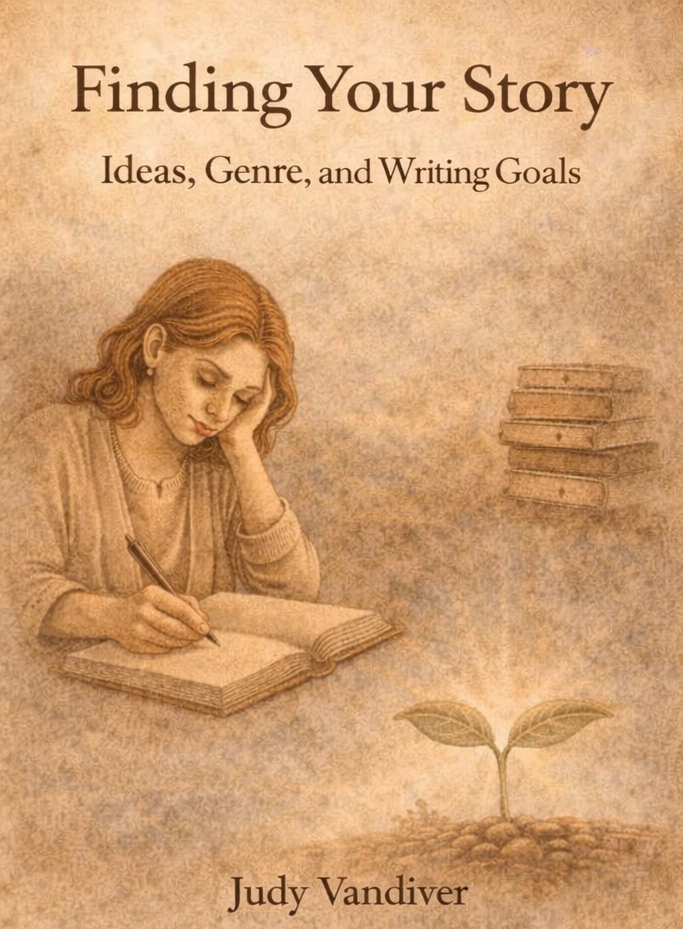
Finding Your Story: Ideas, Genre, and Writing Goals
The Writing Desk
Foundational Lessons for Fiction and Devotional Writers
Lesson One – Finding Your Story: Ideas, Genre, and Writing Goals
Lesson Focus
Every piece of writing begins with an idea—but not every idea becomes a finished story. It’s all about Ideas, Genre, and Writing Goals.. In this lesson, we’ll explore where story ideas come from, how genre shapes reader expectations, and why setting clear writing goals early can save you time, frustration, and false starts later on.
Why This Matters
Many writers stall before they ever truly begin—not because they lack talent or discipline, but because they haven’t yet answered a few foundational questions: What am I writing? Why am I writing it? And where do I want this piece to go?
Ideas are exciting. They often arrive suddenly, when we least expect them. But ideas alone aren’t enough to carry a story or devotional to completion. Without clarity about genre and goals, writers often wander—starting strong, then losing momentum, or discovering halfway through that they’re writing a different piece than they intended.
This lesson helps you pause at the beginning long enough to gain direction. When you know what kind of story you’re telling and why you’re telling it, the rest of the writing process becomes steadier, clearer, and far more intentional.
Core Teaching
Where Ideas Come From
Ideas rarely arrive fully formed. Most begin as fragments—a question, a memory, a line of dialogue, or a situation that won’t let go. For fiction writers, ideas often grow from what if questions. For devotional writers, they may rise from lived experience, Scripture, or a quiet moment of reflection.
What matters isn’t how dramatic an idea is, but whether it has enough substance to explore. A strong idea invites curiosity. It asks something of the writer. It lingers.
Instead of asking, Is this idea good enough? ask:
- Does this idea interest me?
- Does it raise questions I want to explore?
- Can I imagine spending time with it?
If the answer is yes, it’s worth pursuing.
Understanding Genre (and Why It’s Often Confused)
One of the most misunderstood words in writing is genre. Writers often shy away from defining it because they fear it will box them in, limit creativity, or force their work into a category that doesn’t quite fit. In reality, genre isn’t a cage—it’s a compass.
At its core, genre describes the kind of reading experience you are creating for the reader. It answers questions like:
- What emotional journey am I inviting the reader into?
- What expectations am I setting?
- What kind of satisfaction should the reader have at the end?
A mystery promises questions and resolution. A romance promises relationship and emotional payoff. A devotional promises reflection, encouragement, and truth grounded in Scripture. Genre quietly shapes tone, pacing, and focus long before the first page is finished.
Genre vs. Bookstore Placement
This is where confusion often sets in: genre and bookstore placement are not the same thing.
- Genre describes the nature of the story or content.
- Bookstore placement is about marketing and shelving.
A book may be written as historical fiction but shelved under Christian fiction. A devotional might appear in inspirational nonfiction rather than Bible study. A novel with strong romantic elements may be marketed as women’s fiction instead of romance.
Writers don’t always control how or where a book is eventually placed. But they do control the genre they are writing. Your responsibility as a writer is to understand the kind of work you are creating—not to predict where a publisher or bookstore might shelve it later.
Why Genre Still Matters Early
Even if you never plan to publish traditionally, genre matters because it keeps your writing focused. When writers skip this step, they often blend intentions without realizing it—writing part story, part sermon, part memoir—and wondering why the piece feels uneven.
Defining your genre early helps you:
- Choose what to include and what to leave out
- Decide how much explanation the reader needs
- Maintain consistency in tone and structure
- Serve the reader more clearly
Think of genre as an agreement between you and the reader. You are saying, “This is the kind of journey we’re taking together.”
Ask Yourself These Questions
To clarify genre, try answering:
- Am I primarily telling a story, offering reflection, or teaching?
- What do I want the reader to feel when they finish?
- What promise does this piece make—and does the ending fulfill it?
Once you can answer those questions, genre becomes less intimidating and far more helpful.
Clarifying Your Writing Goals
Goals give your writing direction. Without them, it’s easy to drift or abandon a project when it becomes challenging.
Writing goals don’t have to be grand or public. They simply need to be honest.
Examples of healthy goals:
- I want to finish this story, even if it isn’t perfect.
- I want to explore a spiritual truth honestly.
- I want to practice writing consistently.
- I want to learn the craft, one piece at a time.
- I want to encourage Christians in their daily walk.
Goals can change as your writing grows, but having them in place from the start helps keep you grounded when doubt creeps in.
I’ve written devotionals in the past, along with a few Christian historical romance novels that are still gathering cobwebs. I also have the first book in a cozy mystery series published. My current WIP (work in progress), however, is a mystery—plain and simple.
As I wrote out my goals for this project, this is what I came up with:
- I want to try a new genre. (I chose detective mystery.)
- I want to appeal to both male and female readers.
- I want the novel to reflect how Christians face difficult times.
- I want to show how God leads and guides us in faith.
Notice how this differs from my cozy mystery. A cozy mystery typically involves an amateur sleuth, often a woman. By writing in a new genre—the detective mystery—the focus shifts and becomes more likely to appeal to both genders. At the same time, I’m staying true to my core writing values by creating characters who live in the real world and are guided by faith without becoming preachy.
Examples
Unfocused Idea:
“I want to write something about forgiveness.”
Focused Idea with Genre and Goal:
“I want to write a short devotional about learning forgiveness during a difficult season, using Scripture and personal reflection to encourage readers who feel stuck.”
The difference isn’t inspiration—it’s clarity.
What Not to Do
- Don’t collect ideas endlessly without choosing one to work on.
- Don’t avoid naming your genre out of fear it will limit you.
- Don’t set goals based on comparison or pressure.
- Don’t assume clarity will come later—it usually comes from intentional thinking now.
How To Apply This
- Write down three story or devotional ideas that currently interest you.
- Choose one and identify its genre.
- Write one sentence describing why you want to write it.
- Set one realistic goal for this piece of writing.
- Commit to working on this idea until you learn something from it.
✦ Desk Notes
Clarity at the beginning gives your writing room to grow.
✦ From My Writing Desk
Some of the hardest decisions I’ve made as a writer have come at the beginning—not the end. Choosing one idea over another, naming the genre honestly, and admitting my real goals often felt uncomfortable. But each time I slowed down long enough to do that work, the writing that followed became stronger and more focused.
Exercises
- Idea Inventory:
Write a list of five ideas you’ve never finished. Circle the one that still interests you. - Genre Clarity:
Write a paragraph describing the type of reader this piece is for. - Goal Setting:
Finish this sentence: The purpose of this piece is… - Reflection:
What has kept you from starting—or finishing—your writing in the past?
Looking Ahead
Optional Reading
Affiliate Disclosure
Some of the links on this site are affiliate links. This means I may earn a small commission — at no extra cost to you — if you choose to make a purchase.
I only share products I personally use, love, or believe will genuinely help my reader’s journey. Thank you for supporting my website and helping me keep creating free content.
- Bird by Bird by Anne Lamott
- https://amzn.to/4skZI8cWriting the Breakout Novel by Donald Maass
If these free writing lessons lessons encourage you to write with more confidence, more clarity, and a little more courage, then they’ve done what they were meant to do.
Welcome to The Writing Desk.
Click here for Lesson 1: to be posted January 13, 2026
If you haven’t already joined my Reader’s Circle, please do so. Right away, you’ll receive a short story exclusive to my subscribers. You’ll also discover more editing and writing tips. Come join me in my journey as an author. If you subscribe you will receive a weekly update on the posts I am creating for that week.
Comments
Finding Your Story: Ideas, Genre, and Writing Goals — No Comments
HTML tags allowed in your comment: <a href="" title=""> <abbr title=""> <acronym title=""> <b> <blockquote cite=""> <cite> <code> <del datetime=""> <em> <i> <q cite=""> <s> <strike> <strong>