

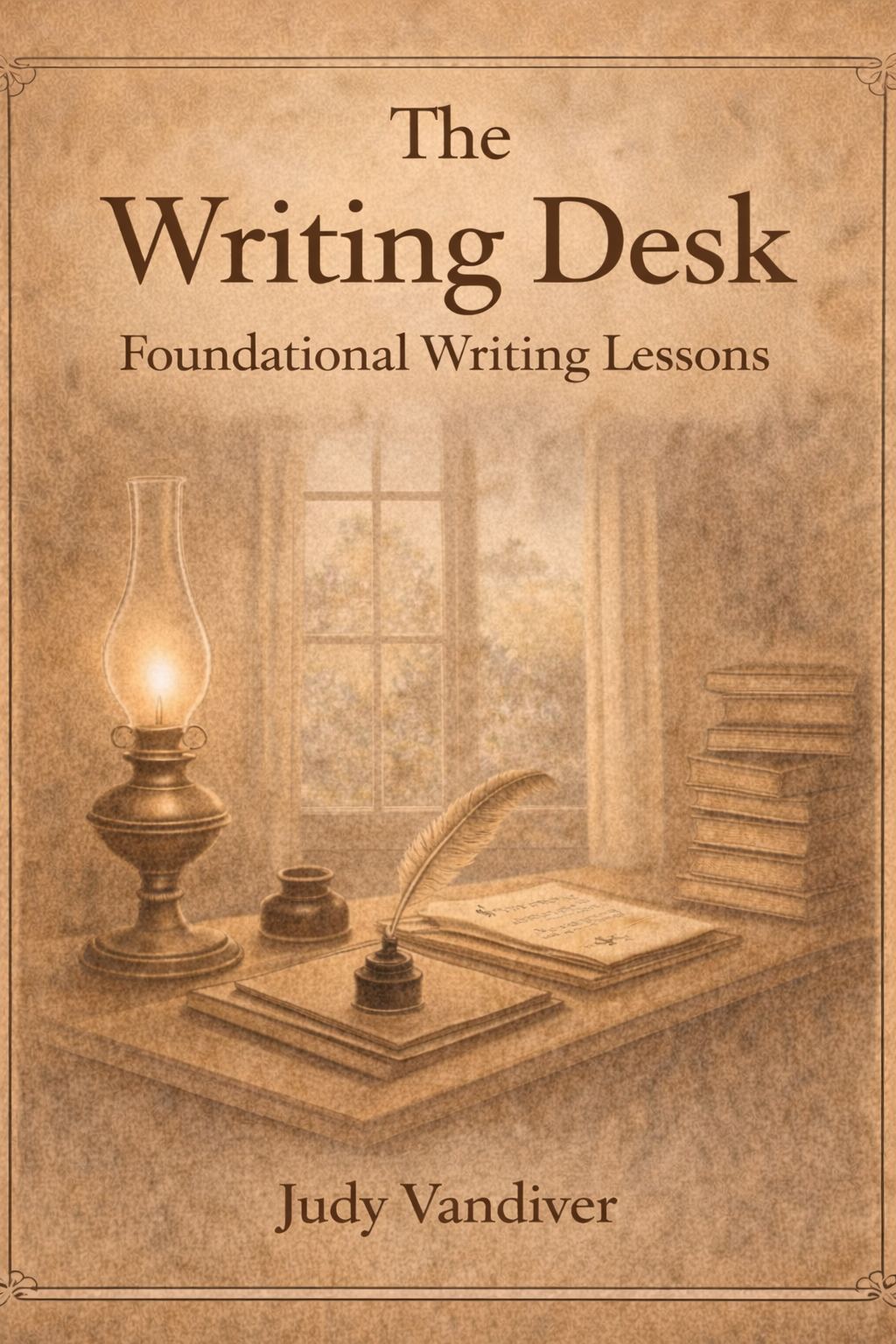
The Writing Desk Foundational Lessons for Fiction and Devotional Writers
Introduction: A Place to Learn, Practice, and Grow
Every writer needs a place to return to—a place where ideas are tested, words are shaped, and stories slowly take form. For me, that place has always been the writing desk. Now, In this series of free writing lessons, I want to share with you much of what I have learned.
How to Use These Free Writing Lessons
There is no single right way to use this series.
The Writing Desk Foundational Lessons for Fiction and Devotional Writers was created as a series of practical writing lessons for those who want to learn the craft without feeling overwhelmed. These lessons are meant to be clear, approachable, and useful—whether you are just beginning or returning to writing after time away.
Each lesson Introduction focuses on one essential element of writing. You’ll find explanations that break down the “why” behind the craft, examples that show how it works on the page, and guidance on what to avoid. At the end of each lesson, you’ll also find exercises designed to help you apply what you’ve learned to your own work.
This series was written with both fiction writers and devotional writers in mind. While the examples may lean one direction at times, the principles remain the same: clarity, purpose, and honest storytelling.
You can read the lessons in order, building your understanding step by step. You can also jump to the topic you need most and return to the others later. Some readers will work through the exercises with a notebook beside them. Others will simply read and reflect before returning to their writing.
Take your time. Revisit lessons as often as you need. Writing is not a race, and growth happens through practice and patience.
These lessons are not meant to replace your voice or tell you what kind of writer you must be. They are meant to give you tools—tools you can use in a way that fits your calling, your style, and your season of life.
Free Writing Lessons
1. Getting Ideas / Genre / Goals
What kind of story am I telling?
Why this story?
Who am I writing for?
2. Plot and Structure: 3-Part vs 5-Part
How devotionals still have structure (truth → reflection → application)
Why structure frees creativity instead of limiting it
3. Characters: Backstory and Description
Why too much backstory too early stalls a story
How faith and values shape character choices
4. The Opening Scene
What an opening scene must do
Common opening mistakes
Why many writers rewrite this last
5. Point of View (POV)
What POV is
How to choose the right one
Common POV slips
6. Setting
Setting as mood
Setting as influence
Setting as silent character
7. Dialogue
What dialogue does
What dialogue should never do
Why people don’t speak in paragraphs
8. Tension
Emotional tension
Spiritual tension
Internal conflict
9. Voice
Consistency
Honesty
Perspective
10. Adverbs, Adjectives & Clichés
How to improve weak writing
11. Tying Up Loose Ends
Plot threads
Character arcs
Emotional resolution
Spiritual resolution
12. Revisions
Revision as refinement, not failure
Letting a story rest
Knowing when to stop
If these free writng lessons lessons encourage you to write with more confidence, more clarity, and a little more courage, then they’ve done what they were meant to do.
Welcome to The Writing Desk.
Click here for Lesson 1: Finding Your Story: Ideas, Genre, and Writing Goals to be published on January 6, 2026.
If you haven’t already joined my Reader’s Circle, please do so. Right away, you’ll receive a short story exclusive to my subscribers. You’ll also discover more editing and writing tips. Come join me in my journey as an author. If you subscribe you will receive a weekly update on the posts I am creating for that week.
Comments
The Writing Desk Foundational Lessons for Fiction and Devotional Writers — No Comments
HTML tags allowed in your comment: <a href="" title=""> <abbr title=""> <acronym title=""> <b> <blockquote cite=""> <cite> <code> <del datetime=""> <em> <i> <q cite=""> <s> <strike> <strong>